HOME
Understanding Papigrafifico: Meaning, Uses, and Importance

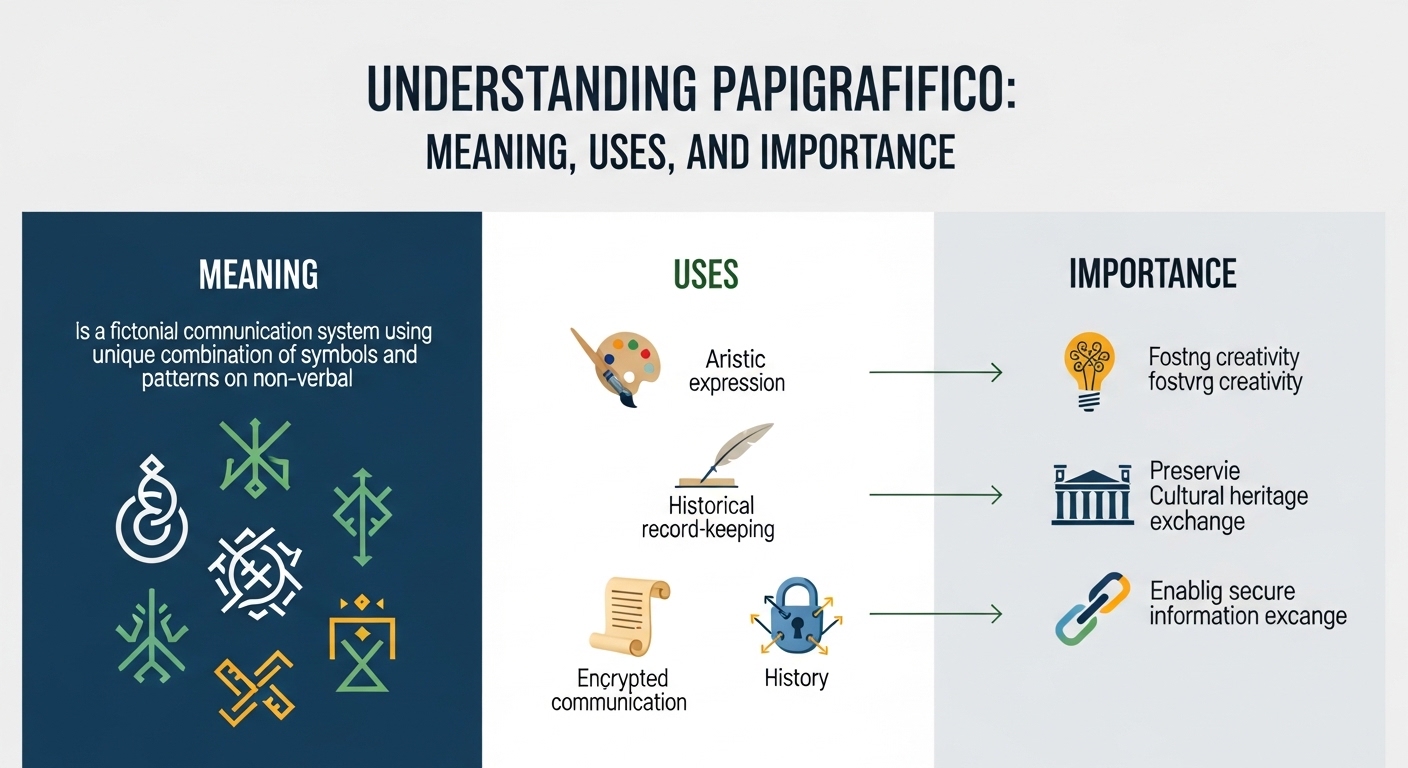
Every so often, a term appears that doesn’t fit neatly into existing categories but still manages to capture attention across digital spaces. Papigrafifico is one of those words. It sounds creative, deliberate, and modern—almost playful—yet it carries a seriousness that invites interpretation. You might encounter it in discussions about digital identity, conceptual frameworks, or emerging creative-tech ecosystems. What makes Papigrafifico compelling isn’t a fixed definition, but the way it reflects how meaning is built in today’s innovation-driven world.
For startup founders, entrepreneurs, and tech professionals, understanding Papigrafifico is less about decoding a single explanation and more about recognizing why such concepts matter now. In an era where ideas evolve faster than terminology, Papigrafifico represents a new way of thinking about expression, structure, and value in digital systems.
The Conceptual Origins of Papigrafifico
Papigrafifico does not appear to originate from a traditional linguistic root or academic discipline. Instead, it feels intentionally constructed—designed to exist in the space between creativity and structure. This is increasingly common in modern innovation, where new words are created to describe experiences or systems that older language cannot adequately capture.
The construction of Papigrafifico hints at layers: communication, design, representation, and interpretation. While it may sound abstract at first, that abstraction is precisely what allows it to be versatile. Like many modern conceptual terms, Papigrafifico gains meaning through use, context, and shared understanding rather than formal definition.
What Papigrafifico Represents in a Modern Context
At its core, Papigrafifico can be understood as a conceptual marker for expressive systems. It refers not to a single technology or process, but to the way ideas are structured, visualized, and communicated in digital environments.
In practical terms, Papigrafifico may describe how information becomes experience. It acknowledges that modern audiences don’t just consume content; they interact with it, interpret it, and reshape it. Papigrafifico captures that intersection where data, design, narrative, and user perception meet.
Why Papigrafifico Matters to Startups and Innovators
Startups succeed or fail based on clarity—clarity of vision, communication, and execution. Yet clarity today does not mean simplicity. It means coherence across complexity. Papigrafifico matters because it offers a way to think about that coherence.
Founders often struggle to explain what makes their product or platform different. Papigrafifico-oriented thinking encourages teams to look beyond features and focus on how their ideas are represented and experienced. It’s not just about what a system does, but how it expresses its purpose to users, investors, and collaborators.
Papigrafifico as a Bridge Between Structure and Creativity
One of the most valuable aspects of Papigrafifico is its ability to bridge traditionally opposing forces. On one side, there is structure—logic, systems, scalability. On the other, there is creativity—storytelling, emotion, intuition. Papigrafifico exists where these forces overlap.
In digital product development, this balance is essential. Overly rigid systems feel lifeless. Overly creative ones lack reliability. Papigrafifico-inspired approaches aim to maintain structural integrity while allowing room for interpretation and evolution.
Real-World Uses of Papigrafifico Thinking
Although Papigrafifico is abstract, its applications are concrete. You can see its influence in how modern platforms communicate complex ideas simply, how interfaces guide users without overwhelming them, and how brands tell stories without overexplaining.
For example, a fintech startup might use Papigrafifico principles to transform intimidating financial data into intuitive visual narratives. A SaaS company might apply it to create dashboards that feel informative rather than overwhelming. In both cases, Papigrafifico helps turn complexity into clarity without stripping away meaning.
Comparing Traditional Communication Models With Papigrafifico
To better understand the shift Papigrafifico represents, it helps to compare it with more traditional approaches to communication and system design.
| Dimension | Traditional Model | Papigrafifico-Oriented Approach |
|---|---|---|
| Information Flow | One-directional | Interactive and interpretive |
| Design Role | Decorative | Meaning-shaping |
| User Engagement | Passive consumption | Active understanding |
| Complexity Handling | Simplify or hide | Structure and express |
| Long-Term Impact | Functional clarity | Emotional and cognitive resonance |
This comparison highlights why Papigrafifico feels aligned with modern digital expectations. Users no longer want just answers—they want understanding.
Papigrafifico in Digital Products and UX Design
User experience design has evolved far beyond usability checklists. Today, great UX tells a story. Papigrafifico supports this evolution by emphasizing how visual language, interaction patterns, and information hierarchy work together.
Instead of forcing users through rigid flows, Papigrafifico encourages systems that guide intuitively. It respects the user’s intelligence while reducing friction. This approach often results in products that feel “natural” even when they are technically complex.
The Role of Papigrafifico in Branding and Identity
Branding in the digital age is no longer about logos alone. It’s about how a brand communicates consistently across touchpoints. Papigrafifico plays a role here by framing branding as an expressive system rather than a static asset.
A Papigrafifico-informed brand aligns tone, visuals, interaction, and values into a coherent experience. Customers don’t just recognize the brand; they feel they understand it. This emotional comprehension builds loyalty more effectively than repetition ever could.
Papigrafifico and the Psychology of Understanding
There is also a cognitive dimension to Papigrafifico. Humans are pattern-seeking by nature. When information is structured in ways that align with how people think, understanding feels effortless. Papigrafifico emphasizes these patterns.
By combining structure with expressive cues, Papigrafifico reduces cognitive strain. Users don’t have to work as hard to make sense of what they see. This creates trust, confidence, and a sense of control—critical psychological factors in digital environments.
Misconceptions Around Papigrafifico
Because Papigrafifico sounds creative, some assume it lacks rigor. In reality, it demands discipline. Expressive systems only work when they are grounded in strong fundamentals. Without structure, expression becomes noise.
Another misconception is that Papigrafifico’s is about aesthetics. While aesthetics play a role, the deeper focus is on meaning and interpretation. Visuals, language, and interaction are tools—not goals.
Why Papigrafifico Is Gaining Attention Now
The growing interest in Papigrafifico’s reflects broader shifts in how we build and consume digital experiences. As systems grow more complex, users demand better explanations—not longer manuals, but smarter design.
Papigrafifico’s answers that demand. It aligns with trends toward human-centered design, storytelling in data, and experiential branding. In many ways, it formalizes what the best teams already do intuitively.
The Long-Term Importance of Papigrafifico
Looking ahead, Papigrafifico’s is likely to become less visible as a term and more influential as a mindset. Its principles will blend into how teams design systems, communicate ideas, and build trust with users.
For founders and entrepreneurs, this means thinking beyond functionality. For tech professionals, it means designing not just for machines, but for human understanding. Papigrafifico’s offers a lens through which digital complexity becomes navigable rather than intimidating.
Conclusion: Why Papigrafifico Deserves Attention
Papigrafifico is not a trend chasing relevance—it’s a reflection of how meaning is created in modern digital environments. By bridging structure and expression, it helps ideas travel further and resonate more deeply.
In a world overflowing with information, the ability to communicate clearly, intuitively, and humanely is a competitive advantage. Papigrafifico’s captures that ability in concept form. For anyone building, scaling, or shaping digital systems today, it’s an idea worth understanding—and applying.
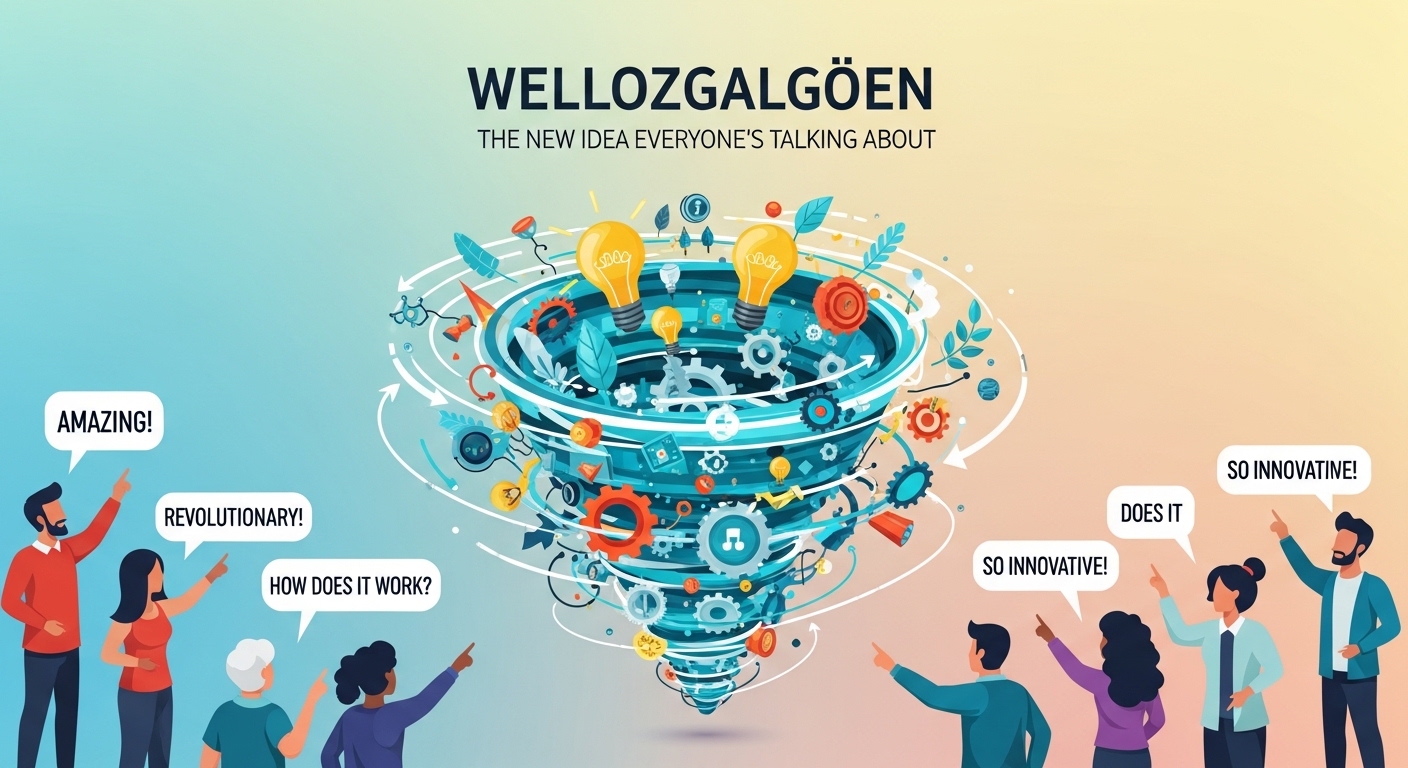
Every few years, a new term starts circulating in tech circles—quietly at first, then everywhere. It appears in strategy conversations, startup pitch decks, internal Slack threads, and thought-leadership essays. Wellozgalgoen is one of those terms. It doesn’t arrive with a fixed definition or a neatly packaged framework, yet it keeps showing up in discussions about innovation, digital systems, and modern problem-solving. That alone makes it worth paying attention to.
For startup founders, entrepreneurs, and tech professionals, understanding Wellozgalgoen is less about memorizing what it “means” and more about grasping what it represents. At its core, Wellozgalgoen reflects a shift in how modern digital ideas are formed, shared, and scaled in a world that moves faster than language can keep up with.
The Emergence of Wellozgalgoen in Modern Digital Culture
Wellozgalgoen did not emerge from academia or legacy industry. Instead, it feels native to the digital-first era—an idea shaped by online collaboration, rapid experimentation, and global connectivity. Like many modern concepts, its origins are not tied to a single inventor or organization. Rather, it appears to have evolved organically, gaining traction through repeated use in forward-looking conversations.
This organic emergence is important. It signals that Wellozgalgoen is responding to a real need. When people lack precise language to describe a new way of thinking, they create it. Wellozgalgoen fills that gap by acting as a flexible concept that can adapt to multiple contexts without losing relevance.
Defining Wellozgalgoen Without Limiting It
One of the most interesting aspects of Wellozgalgoen is that it resists strict definition. Instead of describing a specific technology, product, or method, it functions as a conceptual lens. Through this lens, people examine how systems evolve, how ideas connect, and how innovation spreads.
In practical terms, Wellozgalgoen can be understood as a way of thinking that values adaptability, layered understanding, and intentional design. It acknowledges that modern systems—whether digital platforms, startups, or communities—are rarely linear. They are dynamic, interconnected, and constantly reshaped by feedback.
Why Wellozgalgoen Resonates With Founders and Innovators
Startup founders live in uncertainty. Markets shift, user needs evolve, and technology changes faster than roadmaps. Traditional models that rely on fixed assumptions often fail under this pressure. Wellozgalgoen resonates because it embraces uncertainty rather than resisting it.
The idea encourages builders to think in terms of possibility spaces rather than fixed outcomes. Instead of asking, “What is the final product?” Wellozgalgoen-inspired thinking asks, “How can this system adapt as reality changes?” That shift alone can transform how teams approach strategy, architecture, and growth.
Wellozgalgoen as a Framework for Modern Systems
Although Wellozgalgoen is not a formal framework, it often behaves like one in practice. Teams using this concept tend to design systems that are modular, flexible, and resilient. Decisions are made with future evolution in mind, not just immediate efficiency.
In software development, this might mean building platforms that allow features to evolve independently. In product design, it could involve creating experiences that adapt to different user contexts without becoming fragmented. Across disciplines, Wellozgalgoen supports one principle above all: design for growth without knowing the exact direction of that growth.
Real-World Applications of Wellozgalgoen Thinking
Wellozgalgoen is already visible in how modern organizations operate, even if they don’t use the term explicitly. Companies that succeed long-term often share similar traits: adaptable structures, decentralized decision-making, and a strong feedback culture.
Consider a global SaaS company serving diverse industries. A rigid system would force all customers into the same workflows. A Wellozgalgoen-inspired approach allows the platform to offer structured flexibility—shared foundations with customizable layers. This reduces complexity while expanding reach.
The same thinking applies to digital communities, content platforms, and even internal company culture.
Comparing Traditional Thinking With Wellozgalgoen
To better understand the value of Wellozgalgoen, it helps to compare it with more traditional approaches to building systems and ideas.
| Dimension | Traditional Approach | Wellozgalgoen Perspective |
|---|---|---|
| Change | Viewed as disruption | Viewed as a constant |
| Structure | Fixed and hierarchical | Adaptive and layered |
| Decision-Making | Centralized | Distributed with intent |
| Growth | Linear and planned | Emergent and responsive |
| Long-Term Viability | Fragile under pressure | Resilient through flexibility |
This contrast explains why Wellozgalgoen feels especially relevant in today’s environment. It aligns with how systems actually behave rather than how we wish they would.
The Psychological Appeal of Wellozgalgoen
Beyond strategy and systems, Wellozgalgoen has a psychological dimension. It reduces the cognitive load associated with perfectionism. Instead of striving for flawless execution from day one, it encourages thoughtful iteration.
For teams, this creates psychological safety. People are more willing to experiment when failure is seen as feedback rather than catastrophe. Over time, this mindset leads to better outcomes because learning accelerates.
Wellozgalgoen in Product Design and User Experience
User experience design increasingly reflects Wellozgalgoen principles. Modern users expect personalization, adaptability, and intuitive flow. Static interfaces struggle to meet these expectations.
By applying Wellozgalgoen’s thinking, designers create systems that respond to user behavior rather than forcing predefined paths. The experience evolves as users interact with it, creating a sense of responsiveness and intelligence.
This approach improves engagement while maintaining coherence—a balance that many products fail to achieve.
Organizational Growth Through the Lens of Wellozgalgoen
As startups scale, organizational complexity often increases faster than revenue. Teams grow, communication slows, and decision-making becomes fragmented. Wellozgalgoen’s offers a way to scale without losing clarity.
By encouraging clear boundaries paired with flexible autonomy, organizations can grow while preserving alignment. Leadership focuses on principles and direction rather than micromanagement. Teams operate within defined spaces, adapting locally while contributing globally.
Common Misinterpretations of Wellozgalgoen
Because Wellozgalgoen is abstract, it’s sometimes misunderstood as vague or impractical. In reality, abstraction is what gives it power. It provides guidance without prescription, allowing teams to apply it in ways that fit their specific challenges.
Another misconception is that Wellozgalgoen’s encourages lack of discipline. The opposite is true. It requires intentional structure to support flexibility. Without clarity, adaptability turns into chaos. Wellozgalgoen’s works best when paired with strong fundamentals.
Why Wellozgalgoen Feels Timely Right Now
The timing of Wellozgalgoen’s rise is not accidental. We are operating in an era defined by rapid technological shifts, remote collaboration, and constant uncertainty. Old playbooks are no longer sufficient.
Wellozgalgoen’s offers a language for navigating this complexity. It doesn’t promise certainty, but it provides orientation. That alone makes it valuable to leaders and builders trying to make sense of fast-moving environments.
The Long-Term Impact of Wellozgalgoen Thinking
Over time, concepts like Wellozgalgoen’s tend to fade into the background—not because they fail, but because they succeed. Their principles become embedded in how people think and build.
The long-term impact is subtle but profound. Systems become more resilient. Teams become more adaptive. Innovation becomes less fragile. Wellozgalgoen’s , in this sense, is less a trend and more a signal of maturity in digital thinking.
Conclusion: Why Wellozgalgoen Is Worth Understanding
Wellozgalgoen is not a product, a platform, or a buzzword chasing attention. It is a reflection of how modern ideas are formed and sustained in a complex digital world. For startup founders, entrepreneurs, and tech professionals, it offers a way to think more clearly amid uncertainty.
By embracing adaptability, intentional structure, and layered understanding, Wellozgalgoen’s points toward a future where systems are designed to evolve rather than break. In a world that refuses to stand still, that may be the most valuable idea of all.